Laws are rules that spell out how people should behave in society. Throughout history, people have devised ways of setting disputes between neighbours and punishing wrongdoers. The earliest surviving set of laws was issued by Ur-Nammu, king of Sumer (modern Iraq), about 4,000 years ago.
Tuesday, 30 June 2015

Sunday, 28 June 2015
How do computers store data?
All the data stored in your computer - every word, picture, number, and sound - in captured as a series of electrical pulses that are either on or off. A number system called binary is used to represent these pulses with "1" meaning "on" and "0" meaning "off". A single binary digit, known as a "bit", switches a single switch on or off. By linking together these switches, the computer can carry out the complex operations we demand.
Friday, 26 June 2015
Why worry about extinction?
There have been five mass extinction events in Earth's history (the last time, 65 million years ago, the dinosaurs vanished). A sixth mass extinction is taking place thanks to humans. As we drive more animals and plants to extinction we destroy the life support systems that all spices depend on -including us.
Thursday, 25 June 2015
What on earth can digging unearth ?
If you know where to look, you might find a fossil - the world fossil even comes from the Greek for "dug up". fossils are the ancient remains of organisms that have be preserved in rocks. From them, scientists are able to find out about the different life forms that existed millions of years ago.
How do we measure Time?
By observing the Earth's movements relative to the Sun. One complete spin of the Earth on its axis takes a day. Approximately 365.26 spins (days) make one complete revolution of the Sun, or one solar year. Units of time smaller than a day, such as hours, minutes, and seconds, are measured using clocks. Weeks, months, and years, are measured using calendars.
Wednesday, 24 June 2015
What are Arachnids?
This is the group of invertebrates (animals without backbone) that includes spiders, scorpions, harvestmen, mites, and ticks. There are about 65,000 spices of arachnids, half of which are spiders.
Which are the most successful animals on Earth?
There are more insects living and flying inside an area the
size of a small town than there are human beings on Earth. They live just about
everywhere – only the oceans are insect-free. Insects have six legs, four
wings, and a body divide into three parts.
What's the connection between a slug and an octopus?
Both animals are members of a diverse group of animals called molluscs, which also includes mussels, oysters, limpets, whelks, periwinkles, and squid. There are more than 1,00,000 species of molluscs. Many live in the sea, but some live in fresh water or, like garden snail, on land.

Tuesday, 23 June 2015
Which Century has seen the most wars?
During the 20th century a war was being fought somewhere on the planet every year and there were at least 165 major conflicts. About 40 million soldiers died, nearly 75 per cent of them in the two World Wars. Millions of civilians also lost their lives in the conflicts.
10 major 20th-century wars
- World War 1 (1914-1918)
- Russian Civil War (1918-1921)
- Chinese Civil War (1927-1949)
- Spanish Civil War (1936-1939)
- World War 2 (1939-1945)
- Arab-Israeli (1948-1973)
- Korean War (1950-1953)
- Vietnam War (1964-1973)
- Iran-Iraq War (1980-1988)
- Gulf War (1991)
Monday, 22 June 2015
How many oceans are there?
Earth in not nicknamed the "Blue Planet" for nothing - no other known planet is as watery. We divide this huge body of water into Pacific, Atlantic, Indian, Arctic, and Southern oceans, but in reality, they are all connected as one vast ocean.
Saturday, 20 June 2015
What is money?
We exchange money for goods and services. In the past, people bartered (exchanged) goods of equal worth, but it's not very convenient to swap a chicken and two bags of corn for that DVD you want. That's why we use money - either cash (notes and coins), or a virtual payment using a debit or credit card.
What makes up North America?
This continent is home to three very large countries - Canada, the USA, and Mexico - and 20 smaller countries. It stretches all the way from the Arctic Circle to Central America (the narrow strip of land that joins South America) and includes Greenland and the long chain of Caribbean islands.
Five most populated countries in North America
- United States 303.8 million people
- Mexico 109.9 million people
- Canada 33.2 million people
- Guatemala 13 million people
- Cuba 11.4 million people
Friday, 19 June 2015
How do boats float?
Boats come in all shapes and sizes, from small canoes to giant supertankers. A boat pushes away a certain amount of the water beneath it. The water pushes back against the boat with an upwards force, called buoyancy, which is equal to the weight of the dis placed water. This upwards force keeps the boat floating.
Thursday, 18 June 2015
Why do planes fly above clouds?
Aeroplanes are powered, heavier than-air-aircraft with fixed wings, Most planes are flown above cloud level because there is not as much air resistance higher up in the atmosphere, so they use less fuel. There is also less turbulence above the clouds, meaning passengers don't get thrown about so much and there is less demand for sick bags!
Who invented the Helicopter?
Renaissance artist Leonardo da Vinci sketched an idea for a "helical air screw" - a craft that would spin in the air - in 1480. However, Frenchman Paul Cornu achieved the first successful helicopter flight in 1906. The craft lifted off the ground for 20 seconds
How do Mountains grow?
Where the plates of Earth's crust crash into each other, land is pushed upward, forming mountains. The Himalayas are the tallest mountains on Earth and the youngest. They formed over the last 145 million years, as India crashed into Asia. Mountains are also formed when volcanoes erupt and molten rock builds up into steep mounds.

The tallest mountains in every continent
- Asia - Mount Everest, Nepal and China 8,848 m (29,028 ft)
- South America - Aconcagua, Argentina 6,960 m (22,834 ft)
- North America - Mount McKinley, USA 6,194 m (20,320 ft)
- Africa - Mount Kilimanjaro, Tanzania 5,895 m (19,340 ft)
- Europe - Mount El'brus, Russia 5,642 m (18,510 ft)
- Antarctica - Vinson Massif 4,897 m (16,066 ft)
- Australasia - Puncak Jaya, New Guinea 5,040 m (16,535 ft)
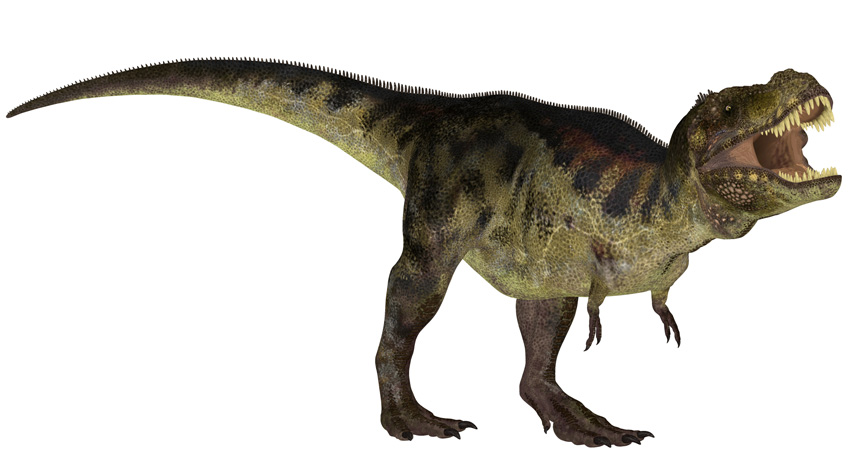
How did dinosaurs defend themselves?
Different dinosaurs reacted in different ways when they came across predators. Iguanodor would blend into its surroundings - its skin patterns and colour camouflaging it. Gallimimus used its speed to escape predators such as Tyrannosaurus rex, reaching speeds of 56 kph (35 mph). Others relied on sturdy body armour.
Wednesday, 17 June 2015
What is a colony?
A settlement set up by a group of people in a new country, with close ties to the country from where they came. Between 1500 and 1900 the European powers founded colonies are around the world , from America to Africa , Asia and pacific. Countries with large numbers of overseas colonies are called empires. Spain was the first European power to create an overseas empire in the 1500s , put by 1900 Britain had the largest empire.
Tuesday, 16 June 2015
What is a religion?
A set of beliefs , shared by a group of people, that gives meaning to life and death is called a religion. Some religions are monotheistic - their followers believe there is only one god. Polytheistic religion have many gods.
Major World Religions
- Christianity 2,000 million followers. Place of origin: Palestine, 2,000 years ago Christians believe Jesus Christ to be the son of God.
- Islam 1,250 million followers. Place of origin: Arabia, 1,400 years ago. Followers, called Muslims, obey the teachings of one God, Allah, as reveled to the Prophet Muhammad.
- Hinduism 830 million followers. Place of origin: India, more than 3,000 years ago Embraces many gods and beliefs.
- Buddhism 360 million followers. Place of origin: India, 2,500 years ago Inspired by the teachings of the Buddha.
- Sikhism 24.3 million followers. Place if origin: India, 500 years ago. Sikhs believe in one God, Sat Guru ("true teacher"), and the teachings of the 10 Gurus.
- Judaism 14.5 million followers. Place of origin: Israel, 3,000 years ago. Believe in one God, who appeared to Abraham and Moses and set out his laws.

8 mistakes you probably make while brushing.
It's not exactly a newsflash that one of the most important reasons to
brush your teeth is to fight off cavities (not to mention prevent bad
breath. But what if the way you brush your teeth actually makes you more
susceptible to cavities, tooth decay and gum disease? Scary . Turns
out, there are a host of common mistakes that many of us make morning and
night that can damage teeth and turn a healthy smile upside-down...You
don't brush for long enough Most people don't spend nearly enough time
brushing their teeth, notes prosthodontist Michael Lenchner. Dentists
recommend brushing for two or three minutes, but few people ever make it
to that. Next time, check your watch to see how long your routine takes.
Chances are, whether you're rushing to get to work or ready to collapse
into bed, you're only brushing for a minute or so.You're not watching
what you're doing Make a point to look in the mirror while you brush your
teeth. It's easy to miss the area right at the gum line, which is the
most important part. That's where plaque, tartar and bacteria can build
up, which cause the gums to become infected (aka gingivitis). Also keep a
close eye on the back molars. If the brush head hits your cheek before
you get to them you could miss them completely.Your technique needs a
major make over Enamel is made of tightly packed, glass-like rods that
extend out toward the surface of the tooth.When you brush side-to-side,
these brittle rods can break, leading to cracks and weakening teeth. So,
hold the brush so the bristles are at a 45-degree angle to the surface
of the teeth and brush in small circles. It's okay to brush in straight
lines on the chewing surfaces. After completing your circles, brush away
from the gum line to clear off loosened plaque and bacteria.You're
brushing too hard, The chances of enamel breakage are greater when you
brush too hard. And sideways brushing can cause notches near the gum
line called abfraction lesions. With continued pressure, they can deepen
into the tooth's inner dentin and cementum layers. What's more,
aggressive brushing can be traumatic for sensitive gums, causing
irritation and recession.You're using the wrong brush. Be sure to buy soft
or ultra soft brushes to minimize damage. Lenchner warns, though,
that even soft bristled toothbrushes can cause abrasions if used
incorrectly . "Electric toothbrushes are great tools if they help you
brush longer and get you to the right places," Lenchner says. If your
dentist gives you a special brush for cleaning implants or crowns, only
use it as directed so you don't disrupt proper gum growth.Use and allow
it to dry completely .As horrifying as it may sound, your toothbrush can
be a veritable haven for germs, including strep and staph. You should
replace a regular toothbrush every three months -sooner if the bristles
look worn, frayed and bent. Over time, the bristles get damaged, like
split ends in your hair, and bacteria nestle in those tiny tears. To
minimize germs' day-to-day growth, rinse your brush with hot water after
use and allow it to dry completely. You have the wrong toothpaste Baking
soda toothpastes are good at getting stains out because they are
abrasive -but that also means they're hard on enamel. It's a trade off
that might not be worth it. As for whitening toothpastes, Lenchner says
that to his knowledge they don't hurt your teeth.You don't rinse
after Effective brushing and flossing unbind bacteria-laden plaque from
the surface of teeth. Rinsing afterward is a key step to make sure that
bacteria leave your mouth for good. Swish with a germ-killing,
alcohol-free mouthwash, or use a fluoride rinse to strengthen and
fortify tooth enamel and prevent cavities. If you don't have mouthwash, a
good rinse-and-spit with water is better than nothing.
Monday, 15 June 2015
What do astronauts do on a space station?
A space station is a working laboratory and home for astronauts,which permanently orbits Earth. Astronauts stay for weeks or months at a time and spend their days carrying out scientific investigations, such as the effect of space on the human body and growing plants. they also maintain the station.
Sunday, 14 June 2015
How many humans have been into space?
About 500 people from nearly 40 nations have traveled into space. However, only three countries have launched astronauts into space - Russia , the United States, and China. The Moon is the farthest destination that any human has been in space.
What is a space probe?
A space probe is the everyday given to an unmanned spacecraft, and there are several types. fly-by crafts travel past their target,orbiters fly around it, and landers touch-down on it, either standing still or releasing a rover to travel across its surface.
How does a telescope "see" in the dark?
A telescope is a light bucket. It collects light from the objects in space using either a lens or, more usually, a mirror. A main mirror reflects the light to a smaller one, which brings the light to a focus where an image of the object is formed.
Saturday, 13 June 2015
Why does the Moon change shape?
The Moon is a large ball of rock that doesn't change shape - it just looks as through it does. The shape we see in the sky today depends on how much of the Moon's face is lit up. Sometimes we observe a thin crescent, and at other times we see half or three quarters of the Moon, and then a fully lit face - a Full Moon.
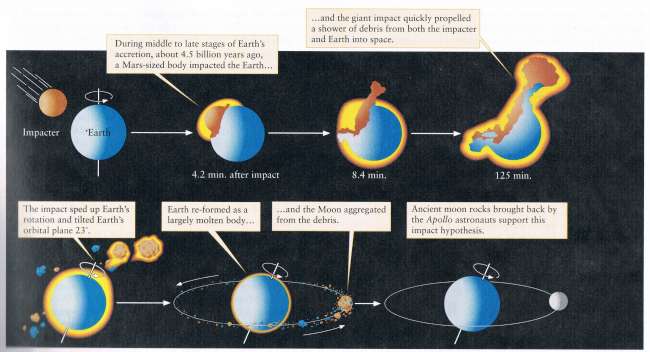
How the Moon was formed?
- A Mars-sized asteroid collides into Earth at a speed of 20 km per sec (12 miles per sec).
- Smashed asteroid pieces and material gouged out of Earth's rocky mantle form a ring around Earth.
- Over several million years, the pieces of orbiting material bump into each other and join together.
- They form one large body - the Moon. About a quarter the size of Earth, it slowly moves out to its present orbit.

Will the sun shine for ever?
The Sun is a star - a vast sphere of luminous gas. Its light is a by-product of gas-fueled nuclear reactions in its core. It shines steadily now, but in about five billion years it will swell up before dying as a cold, dark cinder in space.

Six layers of the Sun
- Corona: The outer atmosphere, seen during an eclipse.
- Chromosphere: The inner atmosphere.
- Photosphere: The visible surface of the Sun from which energy is released in a blaze of light.
- Convective zone: The layer through which the Sun's energy travels outwards through the Sun by "convection".
- Radiative zone: The layer through which energy travels outward from the core as radiation.
- Core: The center of the Sun where nuclear reactions convert hydrogen to helium, producing energy.
Friday, 12 June 2015
What started the age of discovery?
The desire of European merchants to control the trade in luxury goods from Asia - silk, cotton, and spices - combined with technological advances in shipbuilding and navigation led to a wave of long - distance voyages of exploration that redrew the map of the globe between the 15th and 18th centuries.
Why can't you ever take a break from breathing?
Breathing takes air in and out of your lungs, and that air contains the gas oxygen. Every one of your trillions of body cells needs a constant supply of oxygen, 24 hours a day, and oxygen is something your body cannot store - so, no break! Breathing also removes carbon dioxide from the body - a waste gas that your cells are releasing all the time.
Thursday, 11 June 2015
Which is the fastest train?
A train is a series of carriages pulled along a track by locomotive engine.the top speed record- holder is a Japanese maglev (magnetic levitation) train,which reached 581 Kph (361 mph) in 2003.When not setting records,trains provide an efficient means of transporting people and goods across land.

Longest Rail Networks
- USA 2,26,612 km (1,40,810 miles)
- Russia 87,157 km (54,157 miles)
- China 75,438 km (46,875 miles)
- India 63,221 km (39,284 miles)
- Germany 48,215 km (29,959 miles)
- Canada 48,068 km (29,868 miles)
- Australia 38,550 km (23,954 miles)
- Argentina 31,902 km (19,823 miles)
- France 29,370 km (18,250 miles)
- Brazil 29,295 km (18,203 miles)
Who was the first Olympic champion?
The first Olympic Games were held in Greece in 776 BCE. There was only one event - a sprint of 200 m (600 ft) in which the competitors ran naked! The winning runner was a male cook called Koroibos. The prize for athletes back then, along with great fame, was a wreath of olive leaves and a statue of them placed at Olympia. The modern Olympic Games take place every four years with (fully dressed) competitors from all around the world.
How old is the China?

Chinese Inventions
- 1100 BCE Silk
- 500 BCE Cross Bow
- 100 BCE Iron Plough
- 200 CE Woodblock Printing
- 500 Paddle-wheel Ship
- 600 Parcelain
- 600 Fireworks and Gunpowder
- 950 Navigational Compass
Why does the wind blow?
The Earth's weather is caused by the Sun heating the atmosphere, oceans, and Earth's surface. The hot rises, and the cool air sinks and all this activity gets air moving across the globe. The Sun also evaporates water in lakes, rivers, and seas to make clouds and rain.

What are rocks made of?
Every type of rock has its own "recipe" of one or more minerals found on Earth, each with its own unique shape and colour. Earth's rocks are like buried treasure - they are full of valuable minerals and contain metals, gemstones, fossils, and fuels, such as coal and gas.

Fast Facts about Rocks
- Earth started as a fiery mass of molten rock, but about 4 billion years ago the outer layer began to cool and form a hard crust.
- There are many types of rocks, formed in three main ways.
- Most igneous rocks appear on the surface as melted rock (magma) brought to the Earth's surface by volcanoes. When this cools, it crystallizes into solid rock.
- Sedimentary rocks are made from loose rocks, and the ancient remains of animals and plants. Carried by wind and water, they compact and harden into solid rock over millions of years.
- Metamorphic rocks are rocks that change when they are baked and crushed by the heat and pressure deep below the Earth's surface.
What is a Skycraper?

The term “Skyscraper”
was first used in the 1880s to describe a building with more than ten storeys. Today
a building isn’t considered to be a skyscraper unless it has at least 40 storeys.
Humans have constructed buildings for shelter for thousands of years and they
come in all shapes and sizes.
Top 10 Tallest Buildings
-
1. Burj Dubai Dubai, United Arab Emirates, 780 m (2,559 ft)2. Taipei 101 Taipei, Taiwan, 509 m (1,670 ft)3. Petronas Tower Kuala Lumpur, Malaysia, 452 m (1,483 ft)4. Sears Tower Chicago, United States, 442 m (1,450 ft)5. Jin Mao Building Shanghai, China, 421 m (1,380 ft)6. Two International Finance Center Hong Kong, China, 416 m (1,362 ft)7. CITIC Plaza Guangzhou, China, 391 m (1,283 ft)8. Shun Hing Square Shenzhou, China, 384 m (1,260 ft)9. Empire State New York City, United States, 381 m (1,250 ft)10. Central Plaza Hong Kong, China, 374 m (1,227 ft)
Smallest and Largest Countries of the World.
Largest Countries
- 1. Russia 1,71,75,400 sq km (65,91,000 sq miles)2. Canada 99,70,610 sq km (38,48,655 sq miles)3. USA 91,61,923 sq km (35,37,438 sq miles)4. China 95,96,960 sq km (37,05,406 sq miles)5. Brazil 85,11,965 sq km (32,85,618 sq miles)
Smallest Countries
- 1. Vatican 0.4 sq km (0.2 sq miles)2. Monaco 1.95 sq km (0.75 sq miles)3. Nauru 21 sq km (8 sq miles)4. Tuvalu 26 sq km (10 sq miles)5. San Marino 61 sq km(24 sq miles)
Wednesday, 10 June 2015
How many Countries are their in the World?
The United
Nations (UN) recognizes 193 countries. They all have international land borders
(through these are sometimes disputed) and an independent government. Countries
usually have their own flag, official emblem, and national anthem. Size doesn’t
matter: the Vatican City, in Italy, the world’s smallest country, is no bigger
than a city block, and has a tiny population, too – about 1,000.
Top 10 Countries by Population
-
1 China 1.3 billion people2. India 1.1 billion people3. USA 303 million people4. Indonesia 237 million people5. Brazil 187 million people6. Pakistan 173 million people7. Bangladesh 154 million people8. Nigeria 146 million people9. Russia 140 million people10. Japan 129 million people
The Great Wall of China - Facts.
Facts
about the Great Wall of China
When was the
Great Wall of China built?
The Great Wall was originally built
over 2000 years ago, around 221 BC. Most of the current Great Wall was built
during the Ming dynasty (between 1368 and 1644.)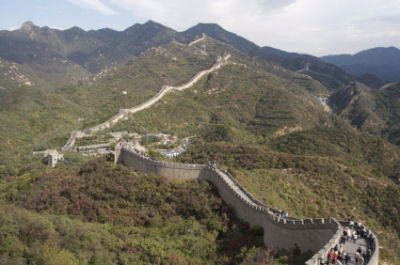
History of the Great Wall of China
It is thought that the earliest wall
was built under the rule of Emperor Qin, who successful unified parts of China
around 221 BC. Previously, individual states had built their own wall defences,
but now Emperor Qin sought to connect the walls to provide defences against
northern invaders. He ordered the building of the “Wan Li Chang Cheng" as it was known in China. This
translates as "the ten thousand li Great Wall". A "li" is a
Chinese length unit. 2 li are equal to 1 km.
Why was the
Great Wall of China built?
It is believed that the main purpose
of the Great Wall was to protect China from invasion or attack by northern
tribes (such as the Mongols).
The Great Wall
of China from Space (or from the Moon)
It is actually a myth that the Great
Wall can be seen from the moon. However, it can be seen from space, and images
have been returned from low-level space vehicles including the space shuttle.
The photo on the left is from NASA, and clearly shows parts of the wall.
Who built the Great Wall of China?
The original wall was ordered by the
Emperor Qin over 2000 years ago. The wall was constructed by labourers
comprising soldiers, common people and criminals. The wall was built of
different materials over the centuries. The earliest wall was largely made of
compacted earth, surrounded by local stone. Much use was made of local material
to keep costs down and enable building to continue quickly. The later Ming wall
was largely made of brick. It is estimated that up to 1 million people died
while constructing the Great Wall!
How tall is the Great Wall of China?
In places the Great Wall is 25 feet
tall. It ranges from 15 to 30 feet wide.
How was the
Great Wall of China defended?
The Great Wall included a series of
watch towers and forts which could house soldiers, grain and weapons. Beacons
could enable the passing of messages quickly along the wall. Special weapons
were developed to enable the wall to be defended against attack, replicas of
which are on display on the modern day wall. At one time it is thought that up
to 1 million soldiers were stationed along the length of the wall!
How long did it take to build the Great Wall
of China?
The Great Wall was built over many
years. It is believed the original Great Wall was built over a period of
approximately 20 years. The Great Wall which is mainly in evidence today was
actually built during the Ming dynasty, over a period of around 200 years.
When was the Great Wall of China finished?
The original Great Wall was extended
and developed until the rule of the Ming Dynasty. When the Ming rulers were
overthrown in 1644, no further work was done on the Wall until recent years in
attempts to preserve parts of the structure.
How many
people did it take to build the Great Wall of China?
Many thousands of people were
involved in the building of the wall. From records it appears that 300,000
soldiers and 500,000 common people were involved in constructing the original
Great Wall under Emperor Qin. Many people lost their lives during this work and
archaeologists have discovered many human remains buried under sections of the
wall.
Fast Facts about The
Great Wall of China:
1. It is a myth that astronauts can see the wall from space.2. It is a chain of fortified walls and towers about 6,400 km (4,000 miles) long.
3. Most of the wall standing today was built 500 years ago by the Ming emperors.
4. Parts of the wall were torn down and used as a quarry on the orders of communist leader Mao Zedong in the 1960s.
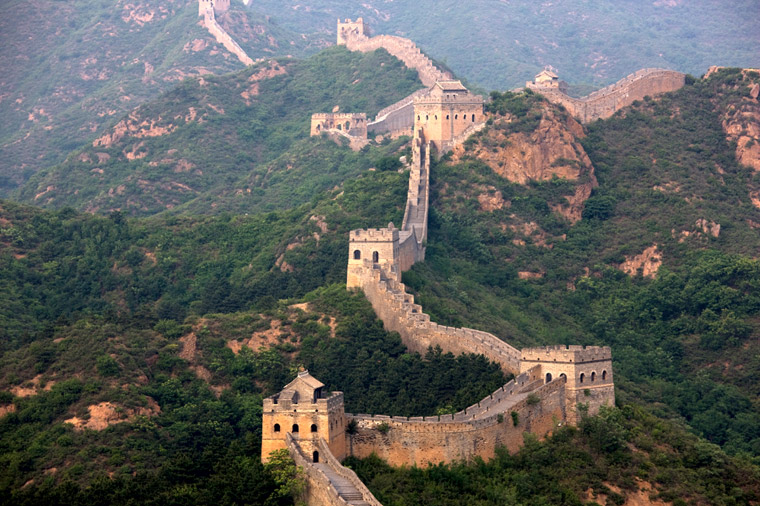 |
| The Great Wall of China |
Which is the largest Continent?
Five most populated countries in Asia
- China 1.3 billion people
- India 1.1 billion people
- Indonesia 237 million people
- Pakistan 173 million people
- Bangladesh 154 million people
Can a Car run on Chocolate?
I
|
t may sound ridiculous, but it’s true. In
2007, two British environmentalists drove a car 7,200 km (4,500 miles) from
Britain to Timbuktu in Mali, Africa, powered by 4,000 kg (8,800 lbs) of
chocolate converted into a biofuel.
Top 5 Car manufacturers:
- Toyota
- General Motors
- Volkswagen
- Ford
- Honda
Top 10 Countries with the longest Road Networks
- USA 64,30,366 km (39,95,643 miles)
- India 33,83,344 km (21,02,312 miles)
- China 19,30,544 km (11,99,544 miles)
- Brazil 17,51,868 km (10,88,560 miles)
- Japan 11,93,000 km (7,41,296 miles)
- Canada 10,42,300 km (6,47,655 miles)
- France 9,50,985 km (5,90,915 miles)
- Russia 8,54,000 km (5,30,650 miles)
- Australia 8,12,972 km (5,05,157 miles)
- Spain 8,12,972 km (4,23,293 miles)
Do you know that:
- The most expensive car in the world is a Bugatti Veyron 16.4 produced by Volkswagen, it costs about US$1.4 million.
- The cheapest car in the world is the Nano, made by Indian car manufacturer Tata. it costs just US$2,500.
Sunday, 7 June 2015
How long do Trees live?
|
T
|
rees can live for an extremely long time
– tens, hundreds, even thousands of years. Most trees have a single woody stem
called a trunk that supports a mass of branches carrying leaves. There are an
estimated 1,00,000 tree species worldwide.
Why do identical twins look exactly the same?
|
I
|
dentical twins happen when a single sperm
(male cell), fertilizes a single egg (female cell) that then splits in two. Each
one goes on to grow into a baby, but both cells share exactly the same genetic
instructions (DNA).
Which are the most successful animal on Earth?
|
T
|
here are more insects living and flying
inside an area the size of a small town than there are human beings on Earth.
They live just about everywhere – only the oceans are insect - free. Insects
have six legs, four wings, and a body divided into three parts.
What is a Festival?
|
P
|
eople get together at festivals to enjoy
themselves. Many festivals have their origins in the agricultural past and mark
the changing seasons, while others celebrate key events in the religious year. Festivals
maybe solemn or fun – or both – and often they are occasions for eating special
foods or giving presents.
How old is the Universe?
|
T
|
he Universe is
about 13.7 billion years old. At its beginning it looked nothing like it does
today. Yet, everything is today’s Universe did exist in some form back then. It
all started with the Big Bang, a kind of explosion that would not only go on to
produce all the matter in the Universe but also marked the start of time.
Thursday, 4 June 2015
Where is the Internet?
he Internet is everywhere. It's a network linking millions of
computers all over the world. With a computer, the right software, and a phone
connection, anyone anywhere in the world can set up a website for anyone else
to look at. There's no one in charge of the Internet and since there's no limit
to the number of computers that can be linked, there's no limit to the number
of computers that can be linked, there's no limit to the amount of information
that can be held on it.
|

Do snakes feel slimy?
No, their scaly skin feels coll and dry, a feature snakes share with other reptiles including lizards, turtles, and crocodiles. Reptiles have backbones and are cold-blooded. This means they rely on the Sun's heat to warm them up. Most reptiles lay eggs with waterproof shells, although some snakes give birth to live young.
Where does the World Energy come from?
Solar power converts sunlight to electricity. We also release energy when we burn fuels such as oil, gas and coal. Wind and water are examples of renewable resources, as they never run out.

Energy Resources
- Coal make up 24 per cent of the World's energy.
- Gas supplies 21 per cent of the World's energy.
- Oil is used more than any fuel, supplying 35 per cent of the World's energy.
- Solar Power can be harnessed directly using special solar-electric cells.
- Wind can turn into electricity using machines called turbines.
- Tide Movement and the waves in oceans can be used to make electricity.
- Nuclear Energy involves splitting atoms, which cause a nuclear explosion that generates huge amount of power.
- Hydroelectric Power is the energy generated by rushing water harnessed by special dams.
- Geothermal means "hot rock", and its energy can be tapped where heat from deep inside the Earth rises to the surface.
- Biomass is the use of natural materials and waste to make energy.
Do the Continents really move?
Yes, the continents and oceans are constantly moving on the Earth's crust. More than 200 million years ago, the continents were joined in one huge land mass, but over millions of years this drifted and separated into the seven main continents we know today: Asia, Africa, Europe, Australia, Antarctica, North America and South America.

Land Mass
- Asia 30 per cent
- Africa 20 per cent
- North America 16 per cent
- South America 12 per cent'
- Antarctica 9 per cent
- Europe 7 per cent
- Australia 6 per cent
Wednesday, 3 June 2015
How many Constellations are there?
There are 88 Constellations in the night sky. Each one is a straight-edged area of sky that includes a pattern made from bright stars, and they all fit together like pieces of a jigsaw to make up the entire sky around Earth.


What is a Dwarf Planet?
Astronomers are constantly discovering new objects that they need to describe. In 2006, they decided on a new class - dwarf planets. These are small, almost round bodies that orbit the Sun in a belt of other objects. The solar System is also full of other small bodies, including moons that orbit planets, asteroids, Kuiper Belt Objects that form a flattened belt beyond Neptune, and comets.
Are Bacteria important?
Bacteria are the most plentiful living organisms on the planet. They are also the smallest, each consisting of a simple, single cell. A few types of bacteria, often called germs, cause disease in humans. but most bacteria are harmless, and some are very useful, including those used in making foods and drugs.
Why do Birds have Feathers?
Feathers help to keep birds warm and enable them to fly. Their wings are equipped with stiff flight feathers to provide both lift and, when the wings are flapped, forward thrust to propel these masters of flight through the air. Something else common to all birds is that they lay eggs with hard shells.
Do Animals have Sixth Sense?
Yes, while humans traditionally have five senses - sight, hearing, taste, touch and smell - many animals possess one or more extra senses. These might include detecting electrical fields or heat to find prey, or magnetic fields in order to navigate.
Why don't haircut hurt?
Because hairs are made of dead cells, so you don't feel a thing. The
dead hair cells are filled with a tough, waterproof protein called
keratin, as are nails, and the skin flakes that you lose daily in their
millions from your skin's surface. All these things are part of the
fantastic protective overcoat and protects your body.
Tuesday, 2 June 2015
Why is blood red?
Blood is red because most of its cells are packed with a red-coloures substance called haemoglobin. Using this, the red blood cells pick up vital oxygen and deliver it to the body's cells. to achieve this and other roles, such as removing waste, blood is pumped along blood vessels by the heart.
Why does your head flop when you Sleep?
When you are awake the muscles in your neck and back hold you and your head upright. When you nod off, those muscles relax and your head falls to one side. Muscles do more than just support you - by pulling your bones they produce every movement from lifting a pen to running a marathon.
Why do bones remain for centuries after a person dies?
Bones are made of two main materials: calcium salts make bones hard, and collagen fibers make them strong but also a bit flexible. After death the collagen rots away, leaving just the durable hard parts behind. In life, the bones of a person's skeleton support the body and protect its internal organs.
Because bones endure after death, skeletons - and the skull and crossbones - have for centuries been symbols of disease, danger, and death.
Your "funny bone" isn't a bone at all; it's a spot on the outer bit of your elbow that, if you hit or knock it, gives you a weird tingly pain. This is because the ulnar nerve crosses the bone at that point.
Human and giraffes have the same number of neck bones, or cervical vertebrae. They both have seven, although each of the giraffe's vertebrae are much longer!
Fact About Google
.png)
Found a new fact about Google Tools, Google.com/Sky lets you explore the far reaches of the Universe using images from NASA satellite, Sloan Digital Sky Survey and Hubble Telescope.
Subscribe to:
Posts (Atom)