Wednesday, 19 August 2015

Raksha Bandhan (रक्षा बन्धन) is a Hindu festival that celebrates the love and duty between brothers and sisters; the festival is also popularly used to celebrate any brother-sister relationship between men and women who are relatives or biologically unrelated. It is called Rakhi Purnima, or simply Rakhi, in many parts of India. The festival is observed by Hindus, Jains, and many Sikhs. Raksha Bandhan is primarily observed in India, Mauritius and parts of Nepal. It is also celebrated by Hindus and Sikhs in parts ofPakistan, and by some people of Indian origin around the world.
Raksha Bandhan is an ancient festival, and has many myths and historic legends linked to it. For example, the Rajput queens practised the custom of sending rakhi threads to neighboring rulers as token of brotherhood. On Raksha Bandhan, sisters tie arakhi (sacred thread) on her brother’s wrist. This symbolizes the sister’s love and prayers for her brother’s well-being, and the brother’s lifelong vow to protect her. The festival falls on the full moon day (Shravan Poornima) of the Shravan month of theHindu lunisolar calendar.

Significance

Raksha Bandhan in Sanskrit literally means “the tie or knot of protection”. It is an ancient Hindu festival that ritually celebrates the love and duty between brothers and their sisters. The sister performs a Rakhi ceremony, then prays to express her love and her wish for the well being of her brother; in return, the brother ritually pledges to protect and take care of his sister under all circumstances. It is one of the several occasions in which family ties are affirmed in India.
The festival is also an occasion to celebrate brother-sister like family ties between cousins or distant family members, sometimes between biologically unrelated men and women. To many, the festival transcends biological family, brings together men and women across religions, diverse ethnic groups and ritually emphasizes harmony and love. It is observed in the Hindu calendar month of Śrāvaṇa, and typically falls in August every year.

Description and rituals

The festival is marked by the several rituals, which vary regionally within India. Typical rituals include:

Prepare for Raksha Bandhan

Days or weeks before Raksha Bandhan, women shop for Rakhi, the ceremonial thread to tie around her brother’s (or brother-like friend’s) wrist. Some women make their own Rakhi. A Rakhi may be a simple thread, woven and colorful; or a Rakhi may be intricate with amulets and decoration on top of it. Sometimes, a Rakhi may be a fancy wrist watch or men’s wrist accessory in the form of bracelet or jewelry. Rakhi in the form of a colorful woven thread is most common. Typically the brother(s) too shop for gifts for the sister, ahead of Raksha Bandhan. The gift from the brother can be a simple thoughtful token of love, and may be more elaborate.

Rakhi ritual

On the morning of Raksha Bandhan, the brothers and sisters get together, often in nice dress in the presence of surviving parents, grandparents and other family members. If the sister and brother are geographically separated, the sister may mail the Rakhi ahead of the Raksha Bandhan day, along with a greeting card or letter wishing her brother well. The ritual typically begins in front of a lighted lamp (diya) or candle, which signifies fire deity. The sister and brother face each other. The sister ties the Rakhi on her brother’s wrist.

Prayer, aarti, promise and food

Once the Rakhi has been tied, the sister says a prayer for the well being – good health, prosperity and happiness – for her brother. This ritual sometimes involves an aarti, where a tray with lighted lamp or candle is ritually rotated around the brother’s face, along with the prayer and well wishes.
The prayer is a self composed note, or one of many published Rakhi poems and prose. One of the earliest examples of a Rakhi prayer is found in Book V, Chapter V of Vishnu Purana; it is the prayer that Yasoda says while tying a Raksha Bandhan amulet on Krishna’s wrist. An abridged form of the prayer is:
May the lord of all beings protect you,
May the one who creates, preserves and dissolves life protect thee,
May Govinda guard thy head; Kesava, thy neck; Vishnu, thy belly;
the eternal Narayana, thy face, thine arms, thy mind, and faculties of sense;
May all negativity and fears, spirits malignant and unfriendly, flee thee;
May Rishikesa keep you safe in the sky; and Mahidhara, upon earth.
After the prayer, the sister applies a tilak (Tikka), a colorful mark on the forehead of the brother. After the tilak, the brother pledges to protect her and take care of his sister under all circumstances.
The sister then feeds the brother, with her hands, one or more bites of sweets (desserts), dry fruits and other seasonal delicacies.

Gifts and hugs

The brother gives his sister(s) gifts such as cards, clothes, money or something thoughtful. The brother may also feed his sister, with his hands, one or more bites of sweets, dry fruits and other seasonal delicacies. They hug, and the larger family ritually congratulate the festive celebration of brother-sister love and protection.
The brother(s) wear the Rakhi for the entire day, at school or work, as a reminder of their sister(s) and to mark the festival of Raksha Bandhan.

Myths and parables

The scriptures, epics and ancient fiction of Hinduism is peppered with stories of Rakhi and Raksha Bandhan. Some of these include:

Indra Dev

According to Hindu scripture Bhavishya Purana, in the war between Gods and demons, Indra – the deity of sky, rains and thunderbolts – was disgraced by the powerful demon King Bali. Indra’s wife Sachi consulted Vishnu, who gave her a bracelet made of cotton thread, calling it holy. Sachi tied the holy thread around Indra wrist, blessed with her prayers for his well being and success. Indra successfully defeated the evil and recovered Amaravati. This story inspired the protective power of holy thread. The story also suggests that the Raksha Bandhan thread in ancient India were amulets, used by women as prayers and to guard men going to war, and that these threads were not limited to sister-brother like relationships.

King Bali and Goddess Laxmi

According to this legend, credited to Hindu scriptures Bhagavata Purana and Vishnu Purana, after Vishnu won the three worlds from the demon King Bali, he was asked by Bali that Vishnu live in his palace, a request Vishnu granted. Vishnu’s wife, Goddess Lakshmi did not like the palace or his new found friendship with Bali, and preferred that her husband and she return to Vaikuntha. So she went to Bali, tied a Rakhi and made him a brother. Bali asked her what gift she desired. Lakshmi asked that Vishnu be freed from the request that he live in Bali’s palace. Bali consented, as well accepted her as his sister.

Santoshi Ma

Ganesh had two sons, Shubh and Labh. On Raksha Bandhan, Ganesh’s sister visited and tied a Rakhi on Ganesh’s wrist. The two boys become frustrated that they have no sister to celebrate Raksha Bandhan with. They ask their father Ganesh for a sister, but to no avail. Finally, saint Narada appears who persuades Ganesh that a daughter will enrich him as well as his sons. Ganesh agreed, and created a daughter named Santoshi Ma by divine flames that emerged from Ganesh’s wives, Rddhi (Amazing) and Siddhi(Perfection). Thereafter, Shubh Labh (literally “Holy Profit”) had a sister named Santoshi Ma (literally “Goddess of Satisfaction”), who loved and protected each other.

Krishna and Draupadi

Krishna considered Draupadi his sister. When Krishna cut his finger while beheading Shishupal, Draupadi immediately tore off a piece of her sari and bandaged his cut. Krishna said that with this loving act, she wrapped him in debt and he would repay each “thread” when the time arrives. Indeed, whenever Draupadi needed Krishna’s protection she fervently prayed for his help, he came to the rescue and gave her unlimited cloth. This is one of the stories of the origin of the Raksha Bandhan festival.
In the epic Mahabharat, Draupadi tied a Rakhi to Krishna, while Kunti tied her Rakhi to her grandson Abhimanyu, before the great war.

Yama and the Yamuna

According to another legend, Yama, the god of Death had not visited his sister Yamuna for 12 years. Yamuna, the goddess of Yamuna river, was sad and consulted Ganga, the goddess of Ganga river. Ganga reminded Yama of his sister, upon which Yama visits her. Yamuna was overjoyed to see her brother, and prepared a bounty of food for Yama. The god Yama was delighted, and asked Yamuna what she wanted for gift. She wished that he, her brother should return and see her again soon. Yama was moved by his sister’s love, agreed and to be able to see her again, made river Yamuna immortal. This legend is the basis for a Raksha Bandhan-like festival called Bhai Duj in some parts of India, which also celebrates brother-sister love, but near Diwali.

Historical References

Alexander the Great and King Puru

According to one legendary narrative, when Alexander the Great invaded India in 326 BCE, Roxana (or Roshanak, his wife) sent a sacred thread to Porus, asking him not to harm her husband in battle. In accordance with tradition, Porus, a Katoch king, gave full respect to the rakhi. On the battlefield, when Porus was about to deliver a final blow to Alexander, he saw the rakhi on his own wrist and restrained himself from attacking Alexander personally.

Rani Karnavati and Emperor Humayun

Another controversial historical account is that of Rani Karnavati of Chittor and Mughal Emperor Humayun, which dates to 1535 CE. When Rani Karnavati, the widowed queen of the king of Chittor, realised that she could not defend against the invasion by the Sultan of Gujarat, Bahadur Shah, she sent a Rakhi to Emperor Humayun. Touched, the Emperor immediately set off with his troops to defend Chittor. Humayun arrived too late, and Bahadur Shah managed to sack the Rani’s fortress. Although contemporary commentators and memoirs do not mention the Rakhi episode and some historians have expressed skepticism about it, it is mentioned in one mid-seventeenth century Rajasthani account.

Rabindranath Tagore and Rakhi

Rabindranath Tagore, the Indian Nobel Laureate for literature, invoked Raksha Bandhan and Rakhi, as concepts to inspire love, respect and a vow of mutual protection between Hindus and Muslims during India’s colonial era. In 1905, the British empire divided Bengal, a province of British India on the basis of religion. Rabindra Nath Tagore arranged a ceremony to celebrate Raksha Bandhan to strengthen the bond of love and togetherness between Hindus and Muslims of Bengal, and urge them to together protest the British empire. He used the idea of Raksha Bandhan to spread the feeling of brotherhood. In 1911, British colonial empire reversed the partition and unified Bengal, a unification that was opposed by Muslims of Bengal. Ultimately, Tagore’s Raksha Bandhan-based appeals were unsuccessful. Bengal not only was split during the colonial era, one part became modern Bangladesh and predominantly Muslim country, the other a largely Hindu Indian state of West Bengal. Rabindranath Tagore started Rakhi Mahotsavas as a symbol of Bengal unity, and as a larger community festival of harmony. In parts of West Bengal, his tradition continues as people tie Rakhis to their neighbors and close friends.
One of Tagore’s poem invoking Rakhi is:[
 The love in my body and heart
 For the earth's shadow and light
 Has stayed over years.
With its cares and its hope it has thrown
 A language of its own
 Into blue skies.
It lives in my joys and glooms
 In the spring night's buds and blooms
 Like a Rakhi-band
 On the Future's hand.

Tuesday, 4 August 2015

27 Sex Facts You Need in Your Life

980185-1_l
Even if you consider yourself a total sexpert, there is always something new to learn about sex. From all the crazy ways it can improve your health to the downright weird things that happen during the act, read on for everythingyou could possibly want to know about getting busy. Plus, we promise it will be a lot more fun than sex ed ever was.
1. Sex reduces stress. On top of obvious, ahem, physical benefits,research shows that getting busy calms nerves, lowers blood pressure, and reduces stress. Grab your partner before that big presentation at work—in one study, participants who had sex before a public speaking experiment were the least stressed.
2. It can make you feel better when you’re sick, too. Studies show that arousal and orgasm boost your immune system. And while this means sex could be good for you when you’re feeling a little under the weather, definitely know when to opt for some chicken soup and some sleep over a little sexual healing.
3. Lube makes it easier to orgasm. If you’re having trouble getting off, all your problems might be solved with one simple addition to the bedroom: lube. Nearly 50 percent of men and women who used lube said it made it easier to have an orgasm, according to a study out of Indiana University’s Center for Sexual Health Promotion. Easiest sex hack ever.
4. Speaking of lube, you can use coconut oil for that. If you’re a health buff, chances are you already know that coconut oil can be used for just about everything. Another thing to add to the list of its many functions:a great DIY lubricant. It’s all-natural, long-lasting and even anti-fungal. Who knew?
5. Lesbians have the most orgasms. Sorry, straight ladies—when it comes to crossing the finish line, lesbians are coming in first. A study that looked at the relationship between sexual orientation and orgasm occurrence found that heterosexual women climaxed 61.6 percent of the time, while homosexual women climaxed 74.7 percent of the time and bisexual women climaxed 58 percent of the time.
6. Other random characteristics can up your orgasm odds, too. Who else joins lesbians on the list of those having the most orgasms? Red heads, Republicans, Android users, and older women, to name a few.
7. Semen is low in calories. Thirty-six calories in a teaspoon, to be exact. Just in case that was a concern of yours.
8. Post-gym is a REALLY good time to get busy. Blood flow to your genital region is higher after a workout, according to one study, making your sexual function go off the charts. Not to mention, your testosterone levels skyrocket while you exercise, so you’ll definitely be in the mood.
9. Speaking of working out…some people get off WHILE doing it. Orgasms are elusive enough as it is, but some lucky people report exercised-induced ones. They can thank repetitious core movements for that one—and some serious good fortune.
10. Some states are kinkier than others. Wyoming, Alaska, Vermont, West Virginia and Oregon are the top kink-curious states—at least according to what they search on Pornhub. California, surprisingly, came in dead last—but maybe they’re expressing their kink outside their search history.
11. Almost 31 percent of guys have faked an orgasm. A survey fromTime Out New York found that guys are in on the trick, too. Time to start second-guessing everything you thought you knew.
12. Love makes for better sex. A recent study presented at the annual meeting of the American Sociological Association found that the most mind-blowing sex comes with being in love with your partner.
13. Condoms don’t actually affect pleasure all that much. Next time a guy complains about using a condom serve him up this study that found men and women enjoy sex just as much with condoms as they do without. In fact, condoms might even make sex better, thanks to new, pleasure-enhancing innovations.
14. Traveling is prime time for one night stands.  HostelBookers com surveyed over 11,000 of its users about their “juiciest travel sex secrets” and found that a whopping 52 percent of men and 41 percent of women have had one-night stands while traveling. Get it, world travelers.
15. Hooking up can lead to marriage. You might think that hooking up and settling down are mutually exclusive, but it turns out that one third of married couples were originally a hookup, according to a report from the National Marriage Project. Okay, so every one night stand might not be marriage material, but hey—don’t count out the possibility.
16. Nipplegasms exist. Add this to the list of crazy orgasms you probably can only dream about. But here’s how it works: Nipple stimulation releases oxytocin, which can cause the uterine and vaginal contractions associated with orgasm. This brings more blood flow to the genitals and, for some lucky women, that can mean an orgasm.
17. Sex can lead to more regular cycles. If you have period trouble, sex should be on the top of your list of cures to try (okay, barring consulting an actual doctor). Researchers at Stanford and Columbia Universities found that women who had sex at least once a week had more regular cycles.
18. You feel less pain during sex. Ever wonder why things like spanking and hair-pulling go from bad pain to good pain when brought into the bedroom? That’s because your pain threshold can increase significantly during arousal, according to a study published in the Journal of Sex Research.
19. One in 5 people use their smart phones during sex. Yes, you read that correctly. During sex. At least, adults between 18 and 34 years old do, according to a survey by Harris Interactive for Jumio. Here’s hoping that they weren’t using their phones to live-tweet.
20. Sex is a great addition to your regular workout. You’ve probably heard that sex is a great form of exercise—and then heard that fact debunked. Okay, so you won’t be shedding any serious weight on a fitness routine of sex alone, but Canadian researchers found that the level of intensity during sex was practically two-thirds that of exercise. AKA, the perfect supplement to your usual workout.
21. More people prefer coffee to sex. Researchers conducted the survey of over 7,000 and found that 51 percent of them said they could go longer without sex than they could go without coffee. Clearly those people don’t know that orgasms can be a great morning pick-me-up, too—or maybe they just really love their Starbucks. (We understand.)
22. People in New Mexico are having the longest sex sessions. Spreadsheet, a relationship app created to help users monitor their performance in the bedroom, ranked states by their staying power between the sheets. The states with most stamina: New Mexico, West Virginia, Idaho, South Carolina, and Missouri.
23. You can induce sex dreams by your sleep position. If you’re not dreaming about Channing Tatum as much as you’d like, you might want to switch up how you sleep. A study published in Dreaming found that people who slept face down on their stomach with their arms stretched above their head had more sexual dreams—including ones about affairs with celebrities. Bring it on.
24. Socks might be the weird key to your orgasm. Okay, maybe socks won’t magically trigger an orgasm, but they do solve a common orgasm-blocking problem, according to a Dutch study. While measuring orgasms, they found that many of their female participants were uncomfortable due to cold feet. After they gave them socks, the percentage of those reaching orgasm rose from 50 to 80 percent.
25. It may cure your headache. Before reaching for that pain reliever, you might want to try an all-natural approach. One study found that 60 percent of migraine sufferers reported that sex helped ease their pain. Yep, it’s that good.
26. An apple a day can boost your sex life. According to one study, women who ate the fruit once a day had higher sexual quality of life. Plus, apples are delicious, so it’s a win-win.
27. Having an orgasm can make pillow talk better. Well, obviously. But research actually found that post-sex communication is more intimate and open if you climaxed. We call that motivation.

Monday, 3 August 2015

30 True and Interesting fact about girls, Facts about Women.

ship4
1. Hearing the words “I love you” is a great reassurance to a girl that she is beautiful.
2. Some girls care about looks, some care about brains, but ALL girls want a guy who will love and care for them.
3. When a particular guy flirts with a girl very often, a girl would start thinking the guy likes her. So if you treat a girl just as a friend, go easy on the smiles and stare ok?
4. Girls want nothing more than to feel loved.
5. Never tell a girl that she is useless in anyway.
6. A simple ‘Hi’ can brighten a girl’s day.
7. If a girl says she can’t go out with you because she has to study, leave.
8. A girl can’t find anything to hate about the guy she loves (which is why it is so hard for her to ‘get over him’ after the relationship’ s over.)
9. Being too serious can turn a girl off.
10. But if she still calls you or expect a call from you, stay.
11. If you don’t like a girl who likes you, break it to her gently.
12. Girls enjoy talking about what they feel. Music, poetry, drawing sand writing are ways of expressing themselves (which explains why most girls like writing journals).
13. When class pictures come out, a girl would first check who is standing next to her crush before actually looking at herself.
14. When the guy she likes smiles and stares deep into her eyes, she will melt.
15. If a girl starts avoiding you after you reject her, leave her alone for a while. If you still treat her as a friend, talk to her.
16. If you need tips on how to flirt with a girl, read romance stories.
17. Love means devotion, caring and happiness to a girl, in that order.
18. Girls hate it when a guy pays attention to them just to get close to their ‘prettier’ friend.
19. A girl likes to hear compliments, but usually not sure how to react to them.
20. A smile means a lot to a girl.
21. Don’t try to guess a girl’s feelings. Ask her.
22. When she ignores you after you’ve done something wrong, it’s best to give her some time to cool down before touching her heart with an apology.
23. If a girl loves a guy, he will always be on her mind every minute of the day, even though she flirts with other guys.
24. A girl’s best friends usually know best what she is feeling and going through.
25. A girl’s ex-crush will always be in her memory, but the guy she loves now stays in her heart.
26. Girls love having fun!
27. If you like a girl, try making friends with her first. Let her get to know you.
28. When the guy she likes calls her for the first time, the girl may act look uninterested during the call. But as soon as the phone is back on the hook, she will whoop with joy and immediately start telephoning her friends to spread the news.
29. After a girl falls in love with a guy, she’ll wonder why she never noticed him before.
30. When a girl says she’s sad, but she isn’t crying, it means she’s crying in her heart.

Sunday, 2 August 2015

Google

Google is an American Multinational Technology Company specializing in Internet related services and products. These include online advertising technologies, search, cloud, computing and software. Most of its profits are derived from Adwords, an online advertising service that places advertising near the list of search results.

Founder

Google was founded by Larry Page and Scrgey Bin while they were Ph.D students at Stanford University. Together they own about 14% of its shares but control 56% of the stockholder voting power through supervoting stock. They incorporated Google as a privately held company on September 4, 1998. An initial public offering followed on August 19,2004. Its mission statement from the outset was "to organize the world's information and make it universally accessible and useful," and its unofficial slogan was "Don't be evil". In 2004, Google moved to its new headquarters in Mountain View, California, nicknamed the Googleplex.

Facts About Google

  1. Google can process millions of pages in per second.
  2. Google was first stored on ten 4 gb hard drives in Lego easing now showcased by Stanford  University.
  3. Since the founders weren't looking to start their own business, they tried to sell their search engine system.
  4. Google's original name was Backrub , based on the system finding and ranking pages based on back ranks.
  5. Stanford still owns the patent to Google's algorithm, named pagerank.

Earthquakes.


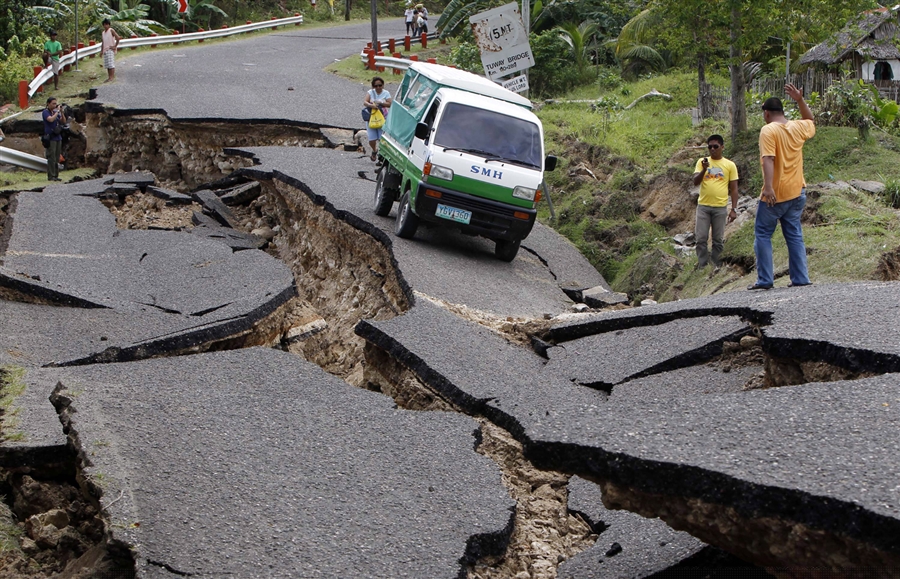
  • Any sudden disturbance below the Earth's surface may produce vibrations or shaking in Earth's crust and some of these vibrations; when reach the surface, are known as earthquakes.
  • The intensity of earthquake waves are recorded by Seismograph.
  • Intensity of shaking is measured on the modified Mercalli Scale.
  • Focus is the point beneath the Earth where earthquake originates.
  • Epicentre is the point just above the focus on the Earth's surface.

Eclipses

When the light of the Sun or the Moon is blocked by another body, the Sun or the Moon is said to be in eclipse.

  • Solar Eclipse: It is caused, when the Moon revolving around the Earth comes in between the Earth and the Sun, thus making a part or whole of the Sun invisible from a particular part of the Earth. Thus, the eclipse can be partial or complete.
  • Lunar Eclipse: When the Earth comes between the Moon and the Sun, the shadow cast by the Earth on the Moon results in a lunar eclipse.

Rocks and its Types.

Rocks


Rocks are made up of individual substances, called minerals, found mostly in solid state. Rocks are classified into three major types:
  • Igneous Rocks are formed by the solidification of the molten magma, e.g., Mica, Granite etc.
  • Sedimentary Rocks are formed due to accumulation of rock particles and organic matter in layers, under tremendous pressure, e.g., Gravel, Peat, Gypsum etc.
  • Metamorphic Rocks were originally igneous or sedimentary but later changed due to pressure, heat or action of water, e.g., Gneiss, Marble, Quartzite etc.

Types of Volcanoes.


  • Active: Which erupts frequently, e.g., Mauna Loa (Hawaii), Etna (Sicily), Vesuvius (Italy), Stromboli (Mediterranean Sea).
  • Dormant: Not erupted for quite sometime, e.g., Fujiyama (Japan), Krakatoa (Indonesia), Barren Island (Andamans).
  • Extinct: Not erupted for several centuries. e.g., Arthur's Seat, Edinburgh, Scotland.
  • Ring of Fire: Hundreds of active volcanoes found on the land near the edges of the Pacific Ocean.
  • Tsunami: Large ocean wave that is caused by sudden motion on the ocean floor. Motion could be an earthquake, volcanic eruption or underwater landslide.

About Universe.

Universe

  • The study of universe is known as Cosmology.
  • The Universe in commonly defined as the totality of everything that exists including all physical matter and energy, the planets, stars, galaxies and the contents of intergalactic space.
  • Galaxy: A galaxy is a vast system of billions of stars, dust and light gases bound by their own gravity. There are 100 billion galaxies in the universe and each galaxy has, on average, 100 billion stars.
  • Our galaxy is Milky Way Galaxy (or the Akash Ganga) formed after the Big Bang.
  • Andromeda is the nearest galaxy to Milky Way.
  • The Big Bang Theory: Big Bang was an explosion of concentrated matter in the universe that occurred 15 billion years ago, leading to the formation of galaxies of stars and other heavenly bodies.
  • Stars are the heavenly bodies made up of hot burning gases and they shine by emitting their own light.
  • Black Hole: Stars having mass greater than three times that of  the sun, have very high gravitational power, so that not even light can escape from its gravity and hence called black hole.
  • Comets: Made up of frozen gases. They move around the Sun in elongated elliptical orbit with the tail always pointing away from the Sun.
  • Constellations: The sky is divided into units to enable the astronomers to identify the position of the stars. These units are called constellations. There are 88 known constellations.
  • Satellites are the heavenly bodies that revolve around the planets. Moon is the natural satellite of the Earth.

Friday, 10 July 2015

What is a Food chain?

All animals must have food to give them the energy they need to survive, and they get it by eating other living things. The transfer of energy from one living thing to another is called a food chain. Every animal is either a predator or prey for other animals. Those at the top of the chain are called top predators.

Thursday, 9 July 2015

10 Shocking Facts About FACEBOOK That Will Amaze You.

  1. 1 in every 13 people on this earth is on Facebook.
  2. Facebook is available in 70 different languages.
  3. Initially, engineers wanted to call the “Like” button as the “Awesome” button.
  4. 83% of prostitutes have Facebook pages.
  5. There are around 6,00,000 hacking attempts made on Facebook everyday.
  6. Facebook tracks sites you visit even after you sign out.
  7. You can’t block Mark Zukerberg on Facebook.
  8. The meaning of the term ‘poke’ is undefined.
  9. 350 millions photos are uploaded everyday on Facebook.
  10. There are 745 million daily mobile users.

Why do I need to eat?

Your body's trillions of tiny cells work day and night to keep you alive. To keep going they need energy, which comes from the food you eat. Food also provides the building materials that your cells use to make you grow, but first your body must digest the food, releasing the simple nutrients that your body can use.

Wednesday, 8 July 2015

Why do I feel pain if I step on a pain ?

Because as the pin sticks into your skin, receptors send signals along nerves to your spinal cord and brain where these signals are analyzed, causing you to feel pain. Your nervous system enables you to move, think, feel, and controls all the activities going on inside your body.    

Tuesday, 7 July 2015

What stops the body working normally?

Your body is made from trillions of cells that work together within tissues, organ, and systems to keep you alive. Keeping healthy helps ensure that cells work normally. But sometimes things go wrong and you get ill. Usually, modern medicine can treat and cure these malfunctions.

Monday, 6 July 2015

When did the pharaohs rule?

The great Ancient Egyptian civilization arose more than 5,000 year among farmers living on the banks of the River Nile. It lasted for 3,000 years - longer than any other civilization on Earth. What is really remarkable is that throughout this long history, the way of life and the art and sculpture of Ancient Egypt remained largely unchanged.

Saturday, 4 July 2015

Why has my bicycle gone rusty?

You probably left it out in the rain again didn't you? A chemical reaction took place as the iron in the bike reacted with oxygen in rain water and in the air to create a new substance called iron oxide - also known as rust.

Friday, 3 July 2015

How do mushrooms grow so fast?

Mushrooms belong to a unique group of living things called fungi. They consists of a network of hair-like threads called hyphae, which spread unseen through the soil. When the conditions are right, hyphae push upwards out of the soil with incredible speed to form a mushroom.

Thursday, 2 July 2015

What is an element?

An element is a pure substance made up of only one type of atom. The atoms of every element are different from the atoms of every other element. 117 elements have so far been discovered or created. Of these, 91 occur naturally on Earth. The others can be created in laboratories. The atoms of one element can combine with atoms of other elements to form compounds. For example, hydrogen and oxygen can combine to form water.

Tuesday, 30 June 2015

What is a Law?

Laws are rules that spell out how people should behave in society. Throughout history, people have devised ways of setting disputes between neighbours and punishing wrongdoers. The earliest surviving set of laws was issued by Ur-Nammu, king of Sumer (modern Iraq), about 4,000 years ago.

Sunday, 28 June 2015

How do computers store data?

All the data stored in your computer - every word, picture, number, and sound - in captured as a series of electrical pulses that are either on or off. A number system called binary is used to represent these pulses with "1" meaning "on" and "0" meaning "off". A single binary digit, known as a "bit", switches a single switch on or off. By linking together these switches, the computer can carry out the complex operations we demand.

Friday, 26 June 2015

Why worry about extinction?

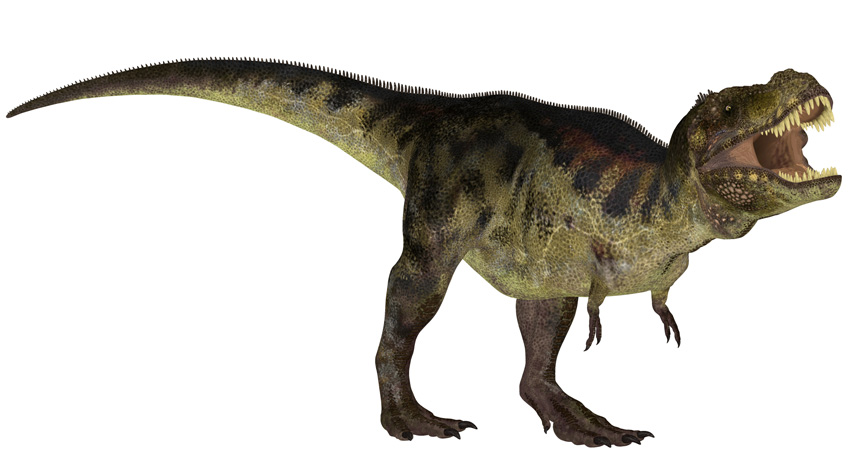
There have been five mass extinction events in Earth's history (the last time, 65 million years ago, the dinosaurs vanished). A sixth mass extinction is taking place thanks to humans. As we drive more animals and plants to extinction we destroy the life support systems that all spices depend on -including us.

Thursday, 25 June 2015

What on earth can digging unearth ?

If you know where to look, you might find a fossil - the world fossil even comes from the Greek for "dug up". fossils are the ancient remains of organisms that have be preserved in rocks. From them, scientists are able to find out about the different life forms that existed millions of years ago.

How do we measure Time?

By observing the Earth's movements relative to the Sun. One complete spin of the Earth on its axis takes a day. Approximately 365.26 spins (days) make one complete revolution of the Sun, or one solar year. Units of time smaller than a day, such as hours, minutes, and seconds, are measured using clocks. Weeks, months, and years, are measured using calendars.

Wednesday, 24 June 2015

What are Arachnids?

This is the group of invertebrates (animals without backbone) that includes spiders, scorpions, harvestmen, mites, and ticks. There are about 65,000 spices of arachnids, half of which are spiders.

Which are the most successful animals on Earth?

There are more insects living and flying inside an area the size of a small town than there are human beings on Earth. They live just about everywhere – only the oceans are insect-free. Insects have six legs, four wings, and a body divide into three parts.

What's the connection between a slug and an octopus?

Both animals are members of a diverse group of animals called molluscs, which also includes mussels, oysters, limpets, whelks, periwinkles, and squid. There are more than 1,00,000 species of molluscs. Many live in the sea, but some live in fresh water or, like garden snail, on land.

Tuesday, 23 June 2015

Which Century has seen the most wars?

During the 20th century a war was being fought somewhere on the planet every year and there were at least 165 major conflicts. About 40 million soldiers died, nearly 75 per cent of them in the two World Wars. Millions of civilians also lost their lives in the conflicts.

10 major 20th-century wars

  1. World War 1 (1914-1918)
  2. Russian Civil War (1918-1921)
  3. Chinese Civil War (1927-1949)
  4. Spanish Civil War (1936-1939)
  5. World War 2 (1939-1945)
  6. Arab-Israeli (1948-1973)
  7. Korean War (1950-1953)
  8. Vietnam War (1964-1973)
  9. Iran-Iraq War (1980-1988)
  10. Gulf War (1991)

Monday, 22 June 2015

How many oceans are there?

Earth in not nicknamed the "Blue Planet" for nothing - no other known planet is as watery. We divide this huge body of water into Pacific, Atlantic, Indian, Arctic, and Southern oceans, but in reality, they are all connected as one vast ocean.

Saturday, 20 June 2015

What is money?

We exchange money for goods and services. In the past, people bartered (exchanged) goods of equal worth, but it's not very convenient to swap a chicken and two bags of corn for that DVD you want. That's why we use money - either cash (notes and coins), or a virtual payment using a debit or credit card.

What makes up North America?

This continent is home to three very large countries - Canada, the USA, and Mexico - and 20 smaller countries. It stretches all the way from the Arctic Circle to Central America (the narrow strip of land that joins South America) and includes Greenland and the long chain of Caribbean islands.

Five most populated countries in North America

  1. United States 303.8 million people
  2. Mexico 109.9 million people
  3. Canada 33.2 million people
  4. Guatemala 13 million people
  5. Cuba 11.4 million people

Friday, 19 June 2015

How do boats float?

Boats come in all shapes and sizes, from small canoes to giant supertankers. A boat pushes away a certain amount of the water beneath it. The water pushes back against the boat with an upwards force, called buoyancy, which is equal to the weight of the dis placed water. This upwards force keeps the boat floating.   

Thursday, 18 June 2015

Why do planes fly above clouds?

Aeroplanes  are powered, heavier than-air-aircraft with fixed wings, Most planes are flown above cloud level because there is not as much air resistance higher up in the atmosphere, so they use less fuel. There is also less turbulence above the clouds, meaning passengers don't get thrown about so much and there is less demand for sick bags!

Who invented the Helicopter?

Renaissance artist Leonardo da Vinci sketched an idea for a "helical air screw" - a craft that would spin in the air - in 1480. However, Frenchman Paul Cornu achieved the first successful helicopter flight in 1906. The craft lifted off the ground for 20 seconds

How do Mountains grow?

Where the plates of Earth's crust crash into each other, land is pushed upward, forming mountains. The Himalayas are the tallest mountains on Earth and the youngest. They formed over the last 145 million years, as India crashed into Asia. Mountains are also formed when volcanoes erupt and molten rock builds up into steep mounds.

The tallest mountains in every continent

  • Asia - Mount Everest, Nepal and China 8,848 m (29,028 ft)
  • South America - Aconcagua, Argentina 6,960 m (22,834  ft)
  • North America - Mount McKinley, USA 6,194 m (20,320 ft)
  • Africa - Mount Kilimanjaro, Tanzania 5,895 m (19,340 ft)
  • Europe - Mount El'brus, Russia 5,642 m (18,510 ft)
  • Antarctica - Vinson Massif 4,897 m (16,066 ft)
  • Australasia - Puncak Jaya, New Guinea 5,040 m (16,535 ft)

How did dinosaurs defend themselves?

Different dinosaurs reacted in different ways when they came across predators. Iguanodor would blend into its surroundings - its skin patterns and colour camouflaging it. Gallimimus used its speed to escape predators such as Tyrannosaurus rex, reaching speeds of 56 kph (35 mph). Others relied on sturdy body armour.

Wednesday, 17 June 2015

What is a colony?

A settlement set up by a group of people in a new country, with close ties to the country from where they came. Between 1500 and 1900 the European powers founded colonies are around the world , from America to Africa , Asia and pacific. Countries with large numbers of  overseas colonies are called empires. Spain was the first European power to create an overseas empire in the 1500s , put by 1900 Britain had the largest empire.

Tuesday, 16 June 2015

What is a religion?

A set of beliefs , shared by a group of people, that gives meaning to life and death is called a religion. Some religions are monotheistic - their followers believe there is only one god. Polytheistic religion have many gods.

Major World Religions

  • Christianity 2,000 million followers. Place of origin: Palestine, 2,000 years ago Christians believe Jesus Christ to be the son of God.
  • Islam 1,250 million followers. Place of origin: Arabia, 1,400 years ago. Followers, called Muslims, obey the teachings of one God, Allah, as reveled to the Prophet Muhammad.
  • Hinduism 830 million followers. Place of origin: India, more than 3,000 years ago Embraces many gods and beliefs.
  • Buddhism 360 million followers. Place of origin: India, 2,500 years ago Inspired by the teachings of the Buddha.
  • Sikhism 24.3 million followers. Place if origin: India, 500 years ago. Sikhs believe in one God, Sat Guru ("true teacher"), and the teachings of the 10 Gurus.
  • Judaism 14.5 million followers. Place of origin: Israel, 3,000 years ago. Believe in one God, who appeared to Abraham and Moses and set out his laws.

8 mistakes you probably make while brushing.

 It's not exactly a newsflash that one of the most important reasons to brush your teeth is to fight off cavities (not to mention prevent bad breath. But what if the way you brush your teeth actually makes you more susceptible to cavities, tooth decay and gum disease? Scary . Turns out, there are a host of common mistakes that many of us make morning and night that can damage teeth and turn a healthy smile upside-down...You don't brush for long enough Most people don't spend nearly enough time brushing their teeth, notes prosthodontist Michael Lenchner. Dentists recommend brushing for two or three minutes, but few people ever make it to that. Next time, check your watch to see how long your routine takes. Chances are, whether you're rushing to get to work or ready to collapse into bed, you're only brushing for a minute or so.You're not watching what you're doing Make a point to look in the mirror while you brush your teeth. It's easy to miss the area right at the gum line, which is the most important part. That's where plaque, tartar and bacteria can build up, which cause the gums to become infected (aka gingivitis). Also keep a close eye on the back molars. If the brush head hits your cheek before you get to them you could miss them completely.Your technique needs a major make over Enamel is made of tightly packed, glass-like rods that extend out toward the surface of the tooth.When you brush side-to-side, these brittle rods can break, leading to cracks and weakening teeth. So, hold the brush so the bristles are at a 45-degree angle to the surface of the teeth and brush in small circles. It's okay to brush in straight lines on the chewing surfaces. After completing your circles, brush away from the gum line to clear off loosened plaque and bacteria.You're brushing too hard, The chances of enamel breakage are greater when you brush too hard. And sideways brushing can cause notches near the gum line called abfraction lesions. With continued pressure, they can deepen into the tooth's inner dentin and cementum layers. What's more, aggressive brushing can be traumatic for sensitive gums, causing irritation and recession.You're using the wrong brush. Be sure to buy soft or ultra soft brushes to minimize damage. Lenchner warns, though, that even soft bristled toothbrushes can cause abrasions if used incorrectly . "Electric toothbrushes are great tools if they help you brush longer and get you to the right places," Lenchner says. If your dentist gives you a special brush for cleaning implants or crowns, only use it as directed so you don't disrupt proper gum growth.Use and allow it to dry completely .As horrifying as it may sound, your toothbrush can be a veritable haven for germs, including strep and staph. You should replace a regular toothbrush every three months -sooner if the bristles look worn, frayed and bent. Over time, the bristles get damaged, like split ends in your hair, and bacteria nestle in those tiny tears. To minimize germs' day-to-day growth, rinse your brush with hot water after use and allow it to dry completely. You have the wrong toothpaste Baking soda toothpastes are good at getting stains out because they are abrasive -but that also means they're hard on enamel. It's a trade off that might not be worth it. As for whitening toothpastes, Lenchner says that to his knowledge they don't hurt your teeth.You don't rinse after Effective brushing and flossing unbind bacteria-laden plaque from the surface of teeth. Rinsing afterward is a key step to make sure that bacteria leave your mouth for good. Swish with a germ-killing, alcohol-free mouthwash, or use a fluoride rinse to strengthen and fortify tooth enamel and prevent cavities. If you don't have mouthwash, a good rinse-and-spit with water is better than nothing.

Monday, 15 June 2015

What do astronauts do on a space station?

A space station is a working laboratory and home for astronauts,which permanently orbits Earth. Astronauts stay for weeks or months at a time and spend their days carrying out scientific investigations, such as the effect of space on the human body and growing plants. they also maintain the station.

Sunday, 14 June 2015

How many humans have been into space?

About 500 people from nearly 40 nations have traveled into space. However, only three countries have launched astronauts into space - Russia , the United States, and China. The Moon is the farthest destination that any human has been in space.

What is a space probe?

A space probe is the everyday given to an unmanned spacecraft, and there are several types. fly-by crafts travel past their target,orbiters fly around it, and landers touch-down  on it, either  standing still or releasing a rover to travel across its surface. 

How does a telescope "see" in the dark?

A telescope is a light bucket. It collects light from the objects in space using either a lens or, more usually, a mirror. A main mirror reflects the light to a smaller one, which brings the light to a focus where an image of the object is formed.

Saturday, 13 June 2015

Why does the Moon change shape?

The Moon is a large ball of rock that doesn't change shape - it just looks as through it does. The shape we see in the sky today depends on how much of the Moon's face is lit up. Sometimes we observe a thin crescent, and at other times we see half or three quarters of the Moon, and then a fully lit face - a Full Moon.

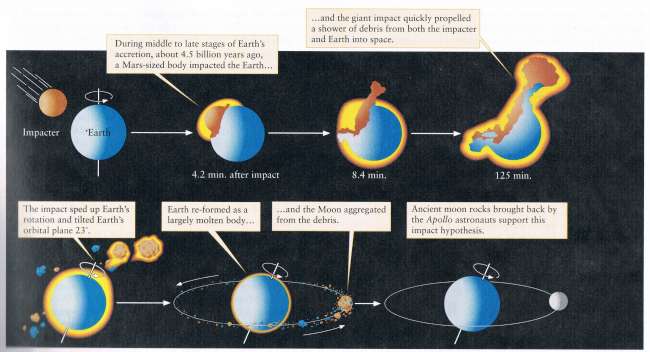
How the Moon was formed?

      
  1. A Mars-sized asteroid collides into Earth at a speed of 20 km per sec (12 miles per sec).
  2. Smashed asteroid pieces and material gouged out of Earth's rocky mantle form a ring around Earth.
  3. Over several million years, the pieces of orbiting material bump into each other and join together.
  4. They form one large body - the Moon. About a quarter the size of Earth, it slowly moves out to its present orbit.

Will the sun shine for ever?

The Sun is a star - a vast sphere of luminous gas. Its light is a by-product of gas-fueled nuclear reactions in its core. It shines steadily now, but in about five billion years it will swell up before dying as a cold, dark cinder in space.

Six layers of the Sun

  1. Corona: The outer atmosphere, seen during an eclipse.
  2. Chromosphere: The inner atmosphere.
  3. Photosphere: The visible surface of the Sun from which energy is released in a blaze of light.
  4. Convective zone: The layer through which the Sun's energy travels outwards through the Sun by "convection".
  5. Radiative zone: The layer through which energy travels outward from the core as radiation.
  6. Core: The center of the Sun where nuclear reactions convert hydrogen to helium, producing energy.

Friday, 12 June 2015

What started the age of discovery?

The desire of European merchants to control the trade in luxury goods from Asia - silk, cotton, and spices - combined with technological advances in shipbuilding and navigation led to a wave of long - distance voyages of exploration that redrew the map of the globe between the 15th and 18th centuries.

Why can't you ever take a break from breathing?

Breathing takes air in and out of your lungs, and that air contains the gas oxygen. Every one of your trillions of body cells needs a constant supply of oxygen, 24 hours a day, and oxygen is something your body cannot store - so, no break! Breathing also removes carbon dioxide from the body - a waste gas that your cells are releasing all the time.

Thursday, 11 June 2015

Which is the fastest train?

A train is a series of carriages pulled along a track by locomotive engine.the top speed record- holder is a Japanese maglev (magnetic levitation) train,which reached 581 Kph (361 mph) in 2003.When not setting records,trains provide an efficient means of transporting people and goods across land.


Longest Rail Networks

  • USA 2,26,612 km (1,40,810 miles)
  • Russia 87,157 km (54,157 miles)
  • China 75,438 km (46,875 miles)
  • India 63,221 km (39,284 miles)
  • Germany 48,215 km (29,959 miles)
  • Canada 48,068 km (29,868 miles)
  • Australia 38,550 km (23,954 miles)
  • Argentina 31,902 km (19,823 miles)
  • France 29,370 km (18,250 miles)
  • Brazil 29,295 km (18,203 miles)

Who was the first Olympic champion?

The first Olympic Games were held in Greece in 776 BCE. There was only one event - a sprint of 200 m (600 ft) in which the competitors ran naked! The winning runner was a male cook called Koroibos. The prize for athletes back then, along with great fame, was a wreath of olive leaves and a statue of them placed at Olympia. The modern Olympic Games take place every four years with (fully dressed) competitors from all around the world.

How old is the China?


Chinese history traditionally begins with the Shang Dynasty, nearly 4,000 years ago, but Chinese civilization goes back much further, to around 9,000 years ago when farming started on the Yellow River  in northern China. The Shang Dynasty was the first in a line of imperial dynasties that lasted until 1911.

Chinese Inventions

  • 1100 BCE Silk
  • 500 BCE Cross Bow
  • 100 BCE Iron Plough
  • 200 CE Woodblock Printing
  • 500 Paddle-wheel Ship
  • 600 Parcelain
  • 600 Fireworks and Gunpowder
  • 950 Navigational Compass

Why does the wind blow?

The Earth's weather is caused by the Sun heating the atmosphere, oceans, and Earth's surface. The hot rises, and the cool air sinks and all this activity gets air moving across the globe. The Sun also evaporates water in lakes, rivers, and seas to make clouds and rain.

What are rocks made of?

Every type of rock has its own "recipe" of one or more minerals found on Earth, each with its own unique shape and colour. Earth's rocks are like buried treasure - they are full of valuable minerals and contain metals, gemstones, fossils, and fuels, such as coal and gas.

Fast Facts about Rocks

  1. Earth started as a fiery mass of molten rock, but about 4 billion years ago the outer layer began to cool and form a hard crust.
  2. There are many types of rocks, formed in three main ways.
  3. Most igneous rocks appear on the surface as melted rock (magma) brought to the Earth's surface by volcanoes. When this cools, it crystallizes into solid rock.
  4. Sedimentary rocks are made from loose rocks, and the ancient remains of animals and plants. Carried by wind and water, they compact and harden into solid rock over millions of years.
  5. Metamorphic rocks are rocks that change when they are baked and crushed by the heat and pressure deep below the Earth's surface.

What is a Skycraper?

The term “Skyscraper” was first used in the 1880s to describe a building with more than ten storeys. Today a building isn’t considered to be a skyscraper unless it has at least 40 storeys. Humans have constructed buildings for shelter for thousands of years and they come in all shapes and sizes.

Top 10 Tallest Buildings
  1. 1.       Burj Dubai Dubai, United Arab Emirates, 780 m (2,559 ft)
    2.      Taipei 101 Taipei, Taiwan, 509 m (1,670 ft)
    3.      Petronas Tower Kuala Lumpur, Malaysia, 452 m (1,483 ft)
    4.     Sears Tower Chicago, United States, 442 m (1,450 ft)
    5.      Jin Mao Building Shanghai, China, 421 m (1,380 ft)
    6.      Two International Finance Center Hong Kong, China, 416 m (1,362 ft)
    7.     CITIC Plaza Guangzhou, China, 391 m (1,283 ft)
    8.      Shun Hing Square Shenzhou, China, 384 m (1,260 ft)
    9.      Empire State New York City, United States, 381 m (1,250 ft)
    10.   Central Plaza Hong Kong, China, 374 m (1,227 ft)

Smallest and Largest Countries of the World.

Largest Countries
  1. 1.    Russia 1,71,75,400 sq km (65,91,000 sq miles)
    2.   Canada 99,70,610 sq km (38,48,655 sq miles)
    3.   USA 91,61,923 sq km (35,37,438 sq miles)
    4.   China 95,96,960 sq km (37,05,406 sq miles)
    5.   Brazil 85,11,965 sq km (32,85,618 sq miles)
       Smallest Countries
  1. 1.    Vatican 0.4 sq km (0.2 sq miles)
    2.   Monaco 1.95 sq km (0.75 sq miles)
    3.   Nauru 21 sq km (8 sq miles)
    4.   Tuvalu 26 sq km (10 sq miles)
    5.   San Marino 61 sq km(24 sq miles)

Wednesday, 10 June 2015

How many Countries are their in the World?

The United Nations (UN) recognizes 193 countries. They all have international land borders (through these are sometimes disputed) and an independent government. Countries usually have their own flag, official emblem, and national anthem. Size doesn’t matter: the Vatican City, in Italy, the world’s smallest country, is no bigger than a city block, and has a tiny population, too – about 1,000.

Top 10 Countries by Population
  1. 1       China  1.3 billion people
    2.      India 1.1 billion people
    3.      USA 303 million people
    4.     Indonesia 237 million people
    5.      Brazil 187 million people
    6.      Pakistan 173 million people
    7.     Bangladesh 154 million people
    8.      Nigeria 146 million people
    9.      Russia 140 million people
    10.   Japan 129 million people

The Great Wall of China - Facts.

Facts about the Great Wall of China
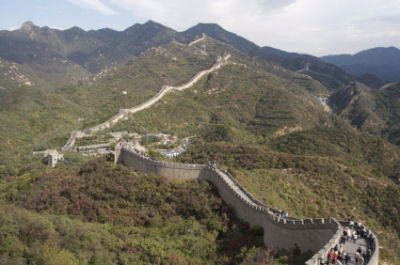
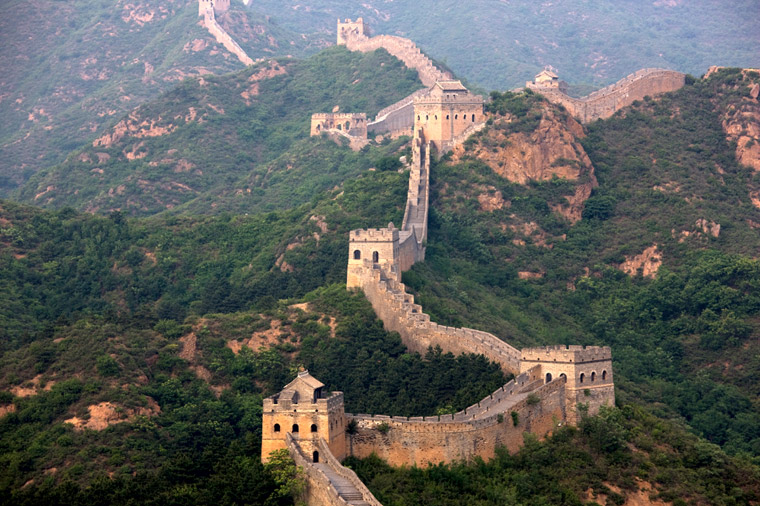
The Great Wall of China was built over 2000 years ago and is the longest man-made structure ever built. It is an instantly recognisable structure which many people are familiar with, though often know little about. We have gathered below some of the most interesting facts about the Great Wall including when the wall was built, how long the wall is, and if it is visible from the moon.

When was the Great Wall of China built?

The Great Wall was originally built over 2000 years ago, around 221 BC. Most of the current Great Wall was built during the Ming dynasty (between 1368 and 1644.)
The Great Wall of China and tourists

History of the Great Wall of China

It is thought that the earliest wall was built under the rule of Emperor Qin, who successful unified parts of China around 221 BC. Previously, individual states had built their own wall defences, but now Emperor Qin sought to connect the walls to provide defences against northern invaders. He ordered the building of the Wan Li Chang Cheng" as it was known in China. This translates as "the ten thousand li Great Wall". A "li" is a Chinese length unit. 2 li are equal to 1 km.
Most of the original wall no longer exists. Over the centuries that followed each dynasty did more work to maintain and develop the wall. The Ming dynasty (1368-1644) carried out a major rebuilding project extending the Great Wall, which resulted in a 6000 kilometre wall which is what is mainly in evidence today.

Why was the Great Wall of China built?

It is believed that the main purpose of the Great Wall was to protect China from invasion or attack by northern tribes (such as the Mongols).

The Great Wall of China from Space (or from the Moon)

It is actually a myth that the Great Wall can be seen from the moon. However, it can be seen from space, and images have been returned from low-level space vehicles including the space shuttle. The photo on the left is from NASA, and clearly shows parts of the wall.

Who built the Great Wall of China?

The original wall was ordered by the Emperor Qin over 2000 years ago. The wall was constructed by labourers comprising soldiers, common people and criminals. The wall was built of different materials over the centuries. The earliest wall was largely made of compacted earth, surrounded by local stone. Much use was made of local material to keep costs down and enable building to continue quickly. The later Ming wall was largely made of brick. It is estimated that up to 1 million people died while constructing the Great Wall!

How tall is the Great Wall of China?

In places the Great Wall is 25 feet tall. It ranges from 15 to 30 feet wide.

How was the Great Wall of China defended?

The Great Wall included a series of watch towers and forts which could house soldiers, grain and weapons. Beacons could enable the passing of messages quickly along the wall. Special weapons were developed to enable the wall to be defended against attack, replicas of which are on display on the modern day wall. At one time it is thought that up to 1 million soldiers were stationed along the length of the wall!

How long did it take to build the Great Wall of China?

The Great Wall was built over many years. It is believed the original Great Wall was built over a period of approximately 20 years. The Great Wall which is mainly in evidence today was actually built during the Ming dynasty, over a period of around 200 years.

When was the Great Wall of China finished?

The original Great Wall was extended and developed until the rule of the Ming Dynasty. When the Ming rulers were overthrown in 1644, no further work was done on the Wall until recent years in attempts to preserve parts of the structure.

How many people did it take to build the Great Wall of China?

Many thousands of people were involved in the building of the wall. From records it appears that 300,000 soldiers and 500,000 common people were involved in constructing the original Great Wall under Emperor Qin. Many people lost their lives during this work and archaeologists have discovered many human remains buried under sections of the wall.

Fast Facts about The Great Wall of China:

1.    It is a myth that astronauts can see the wall from space.
2.   It is a chain of fortified walls and towers about 6,400 km (4,000 miles) long.
3.   Most of the wall standing today was built 500 years ago by the Ming emperors.
4.     Parts of the wall were torn down and used as a quarry on the orders of communist leader Mao Zedong in the 1960s.
The Great Wall of China